Revitalize Your Home with Pasadena Stucco Water Damage Repair
Experience Superior Stucco Water Damage Repair Beyond Expectations
Primary Factors
1. Source Identification
Every successful stucco water-damage repair begins with identifying and correcting the source of moisture intrusion. Common causes include roof and flashing failures, improperly detailed windows and doors, missing or failed sealants, wall penetrations, and poor site drainage that allows water to collect at the base of walls. Without addressing the source, any stucco repair—no matter how well executed—will eventually fail.
2. Assessment of Damage Extent
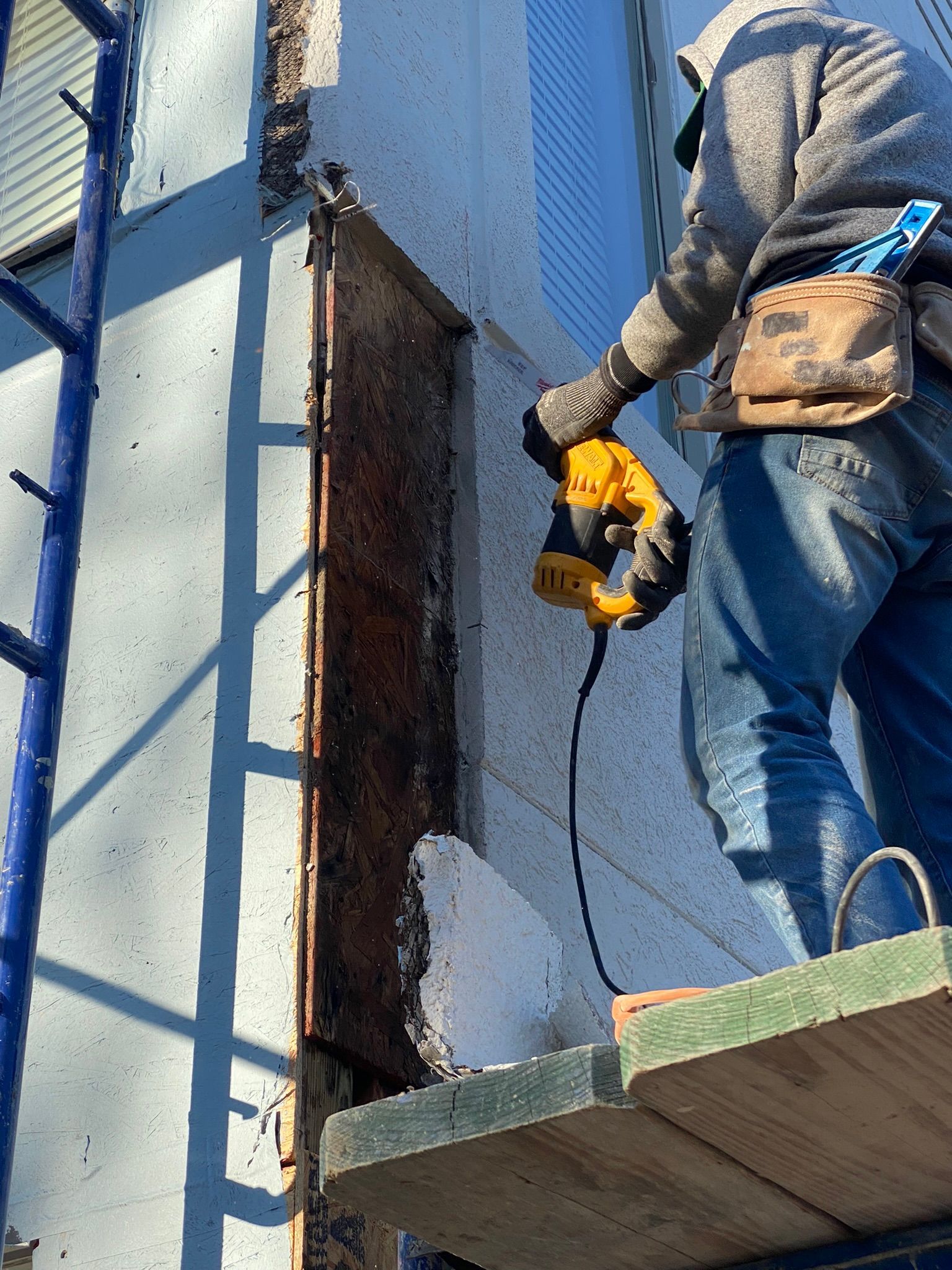
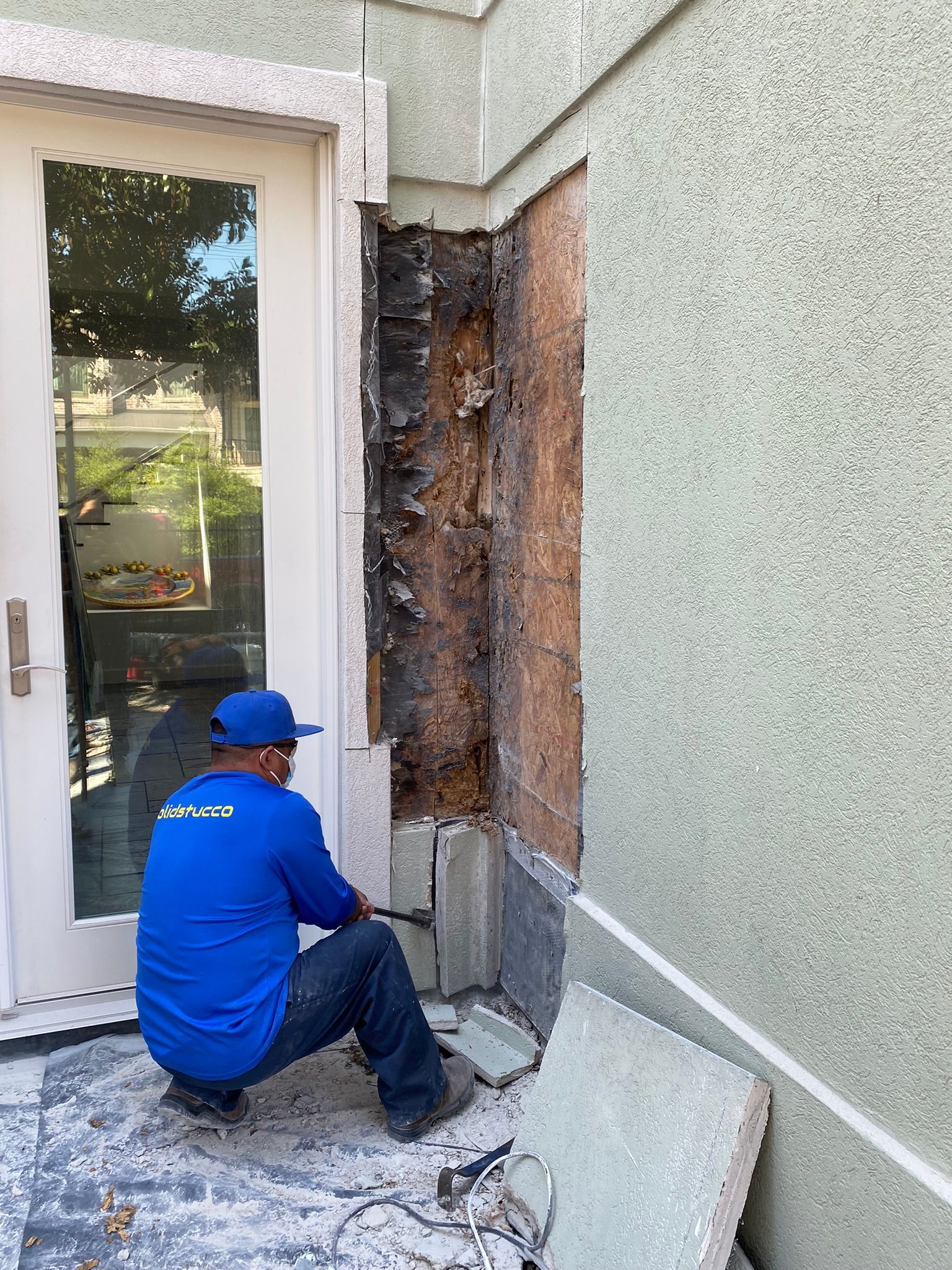
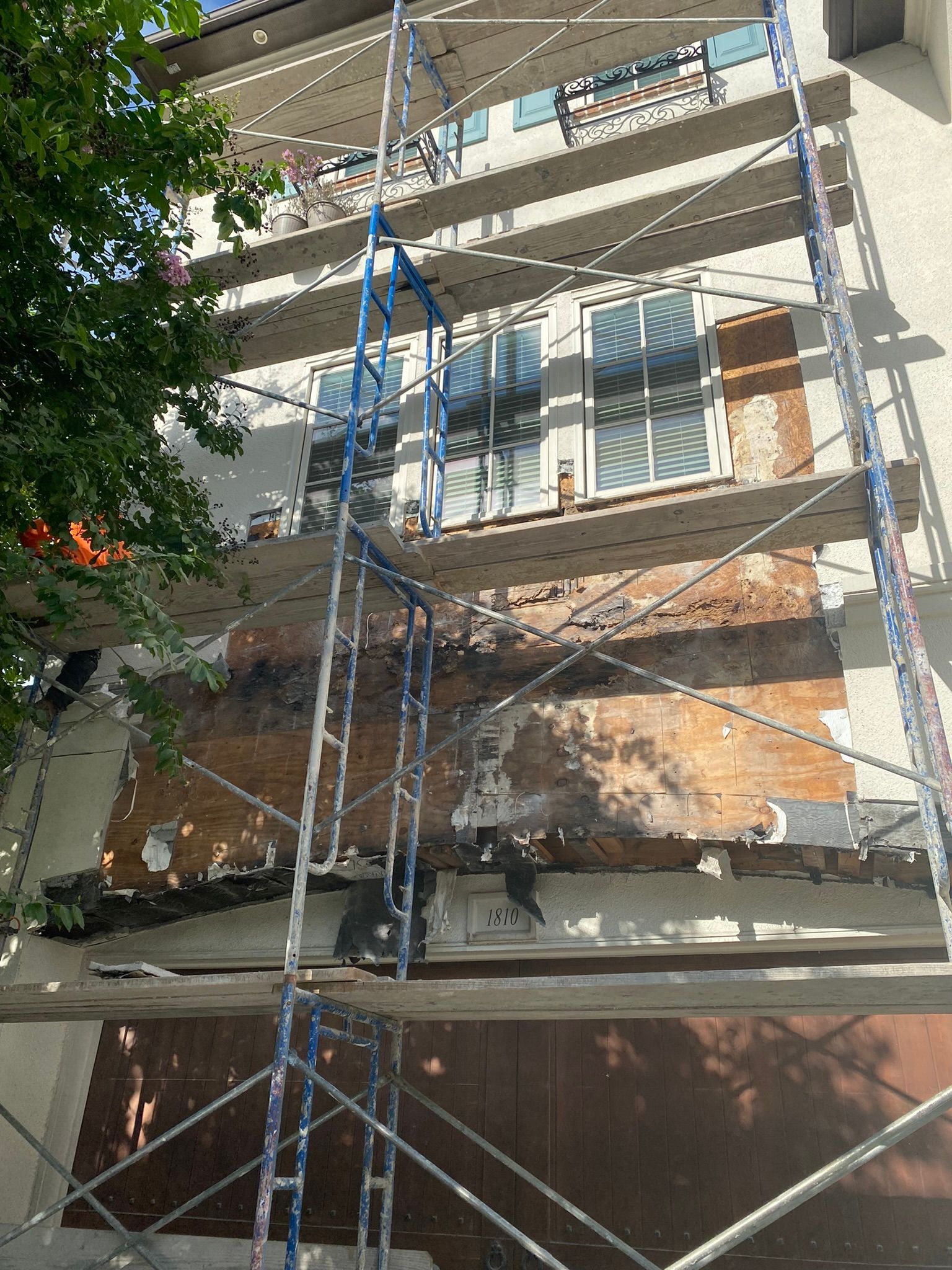
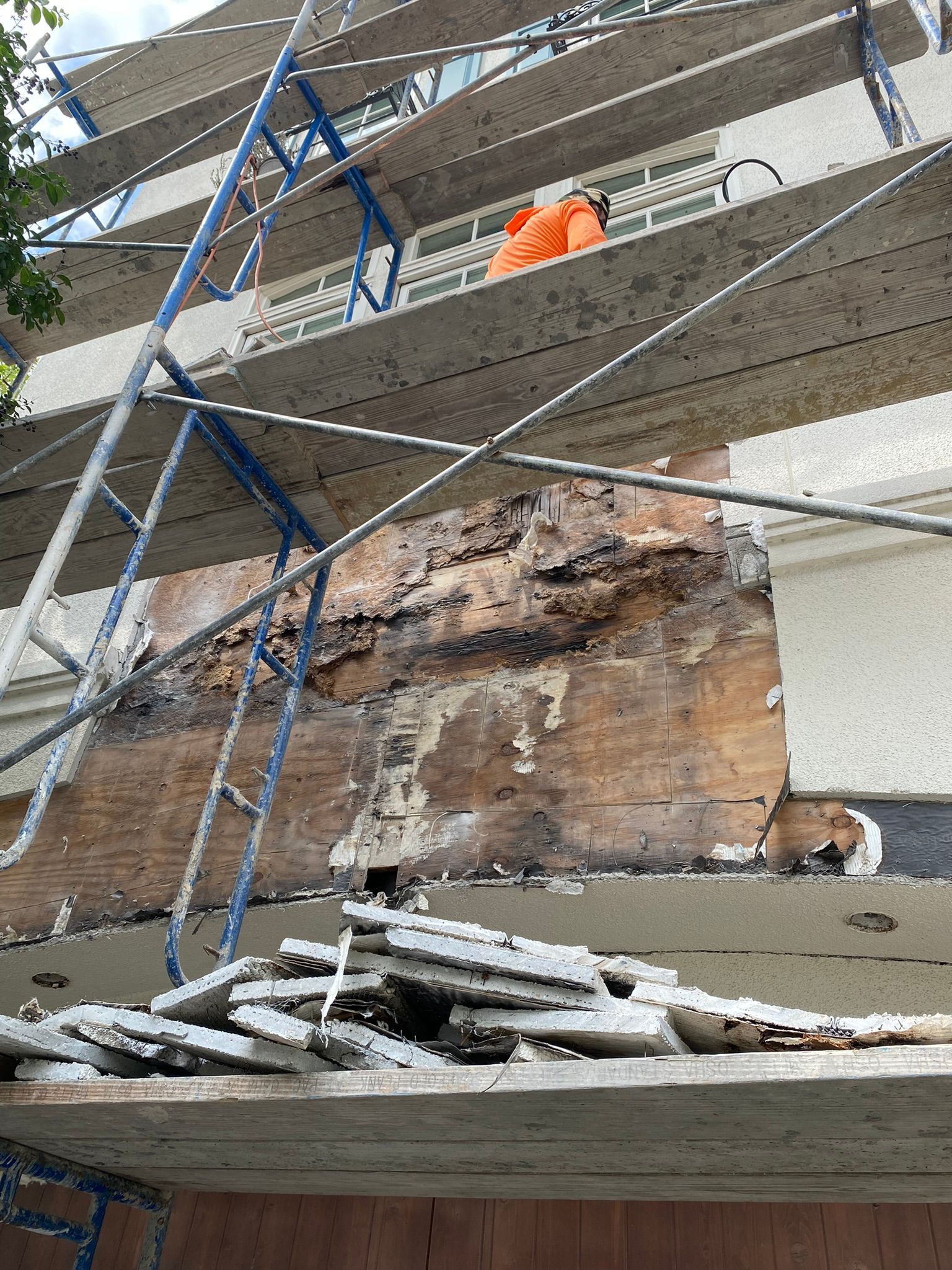
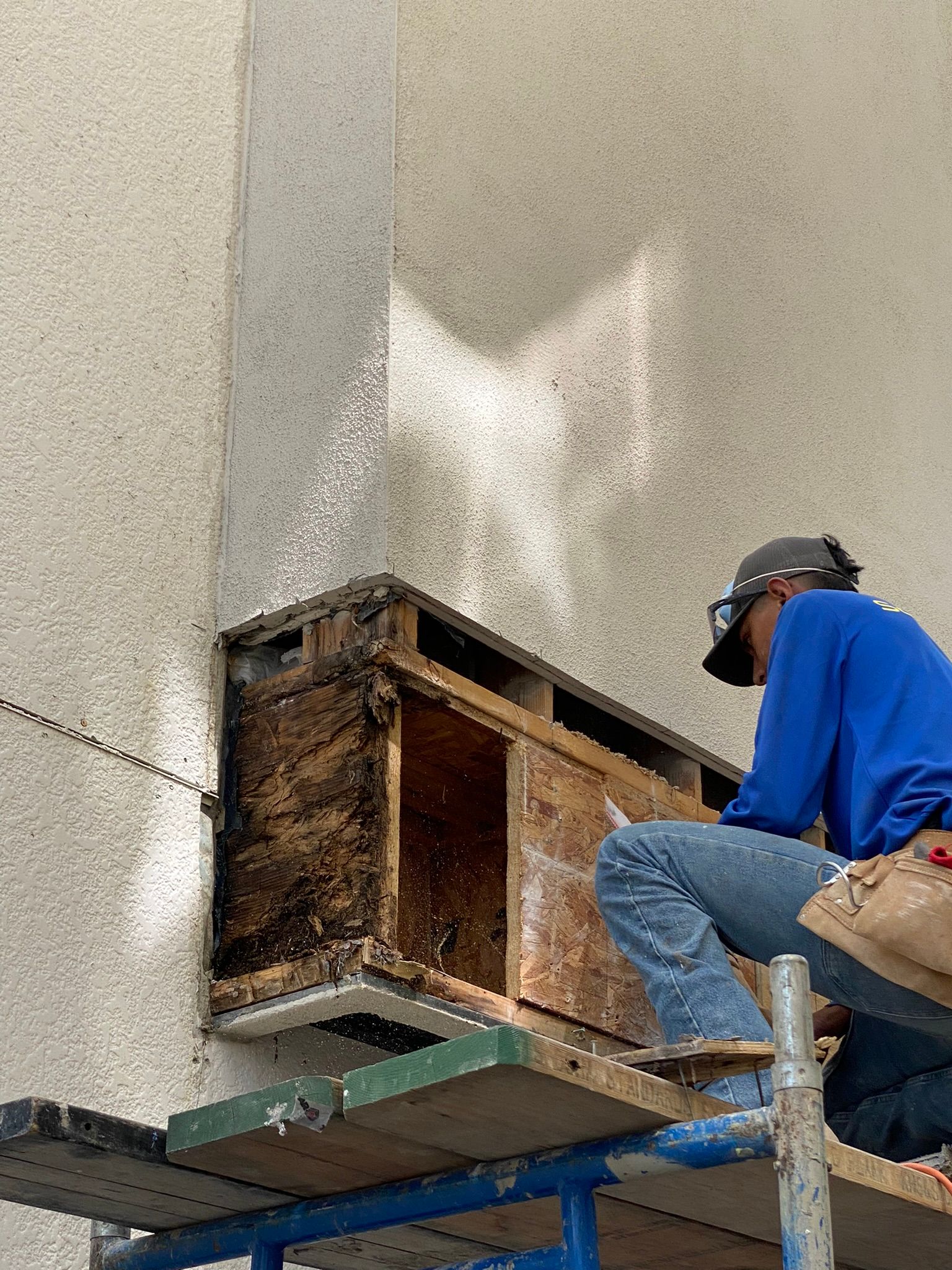
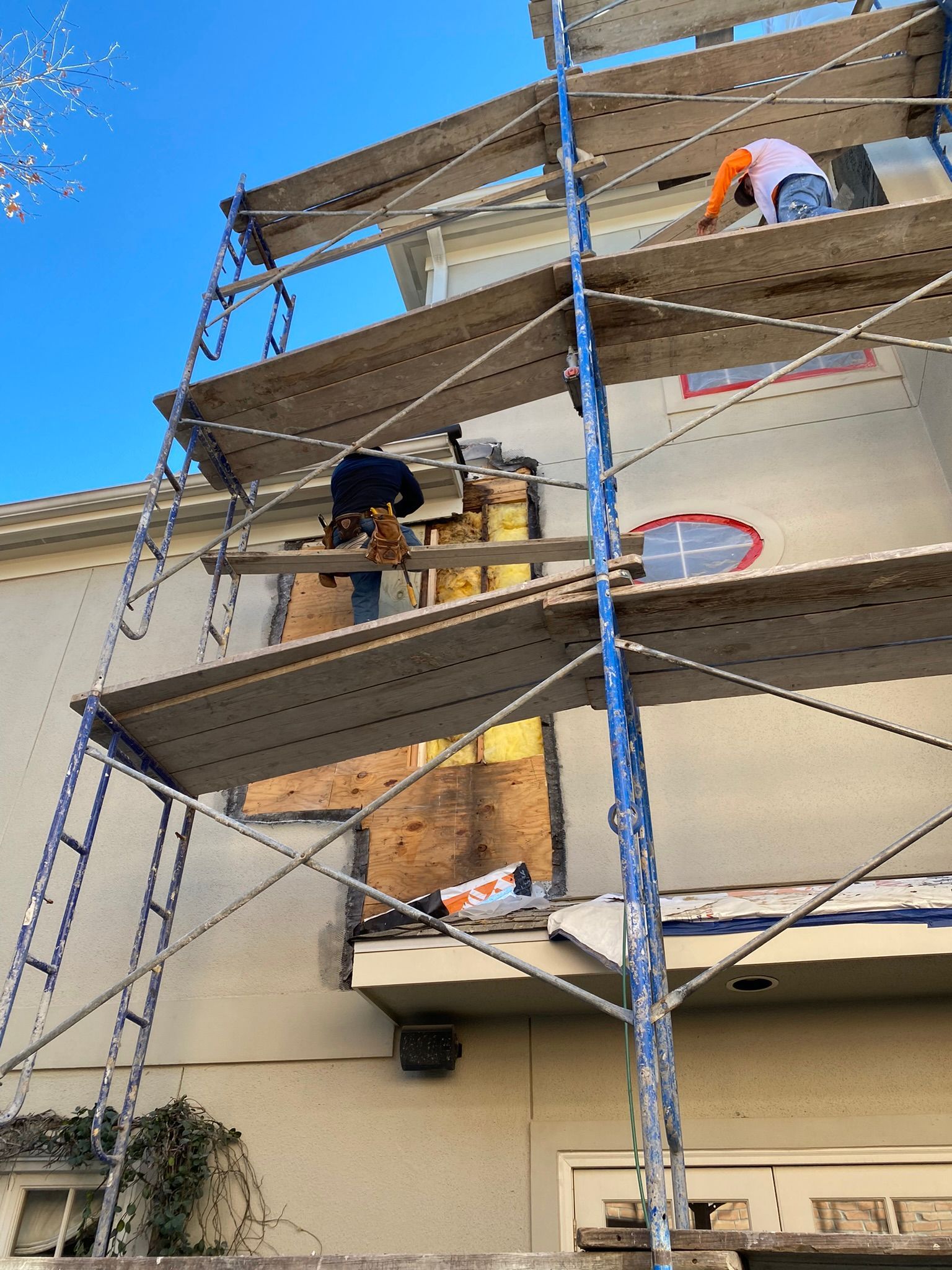
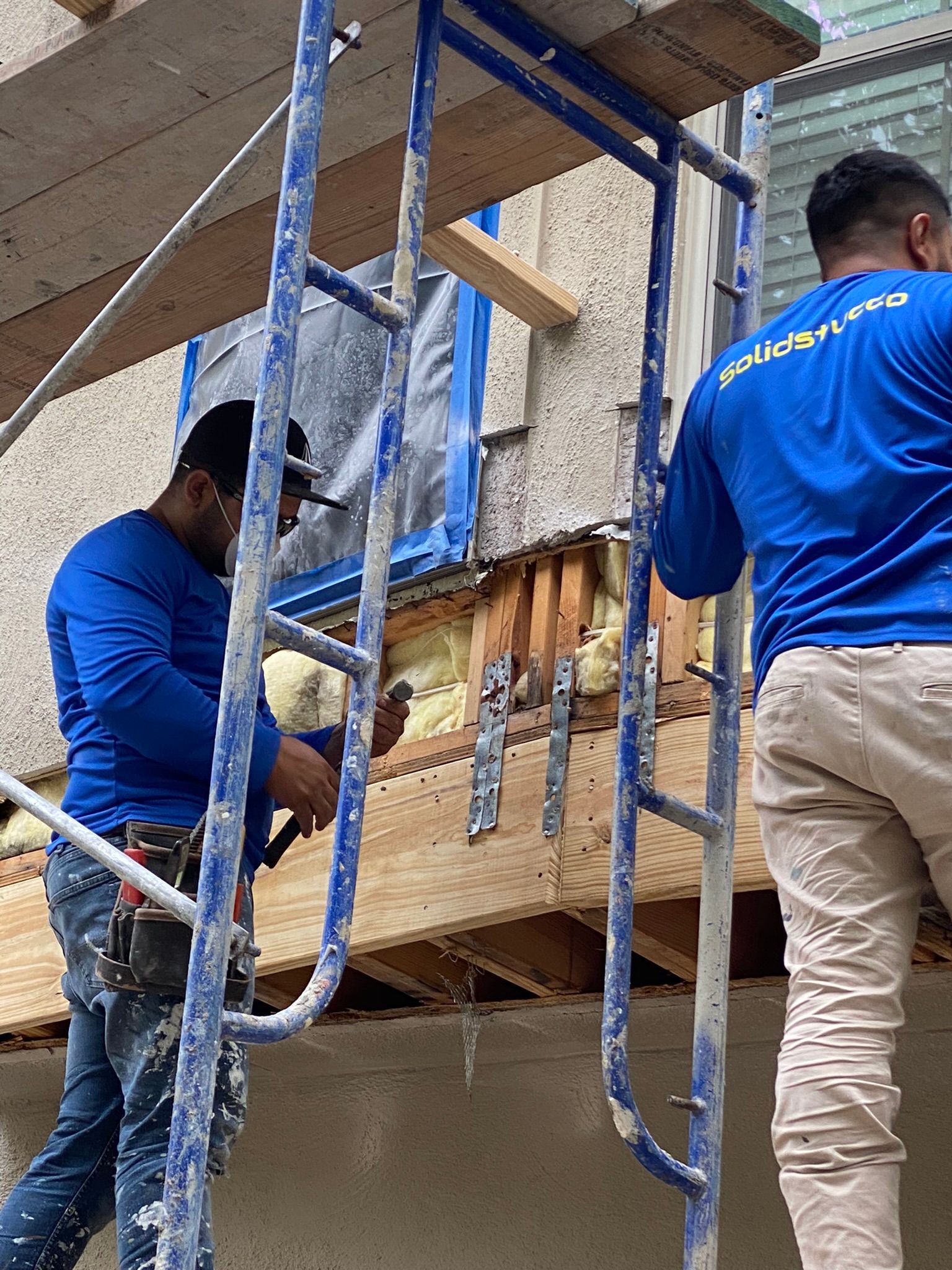
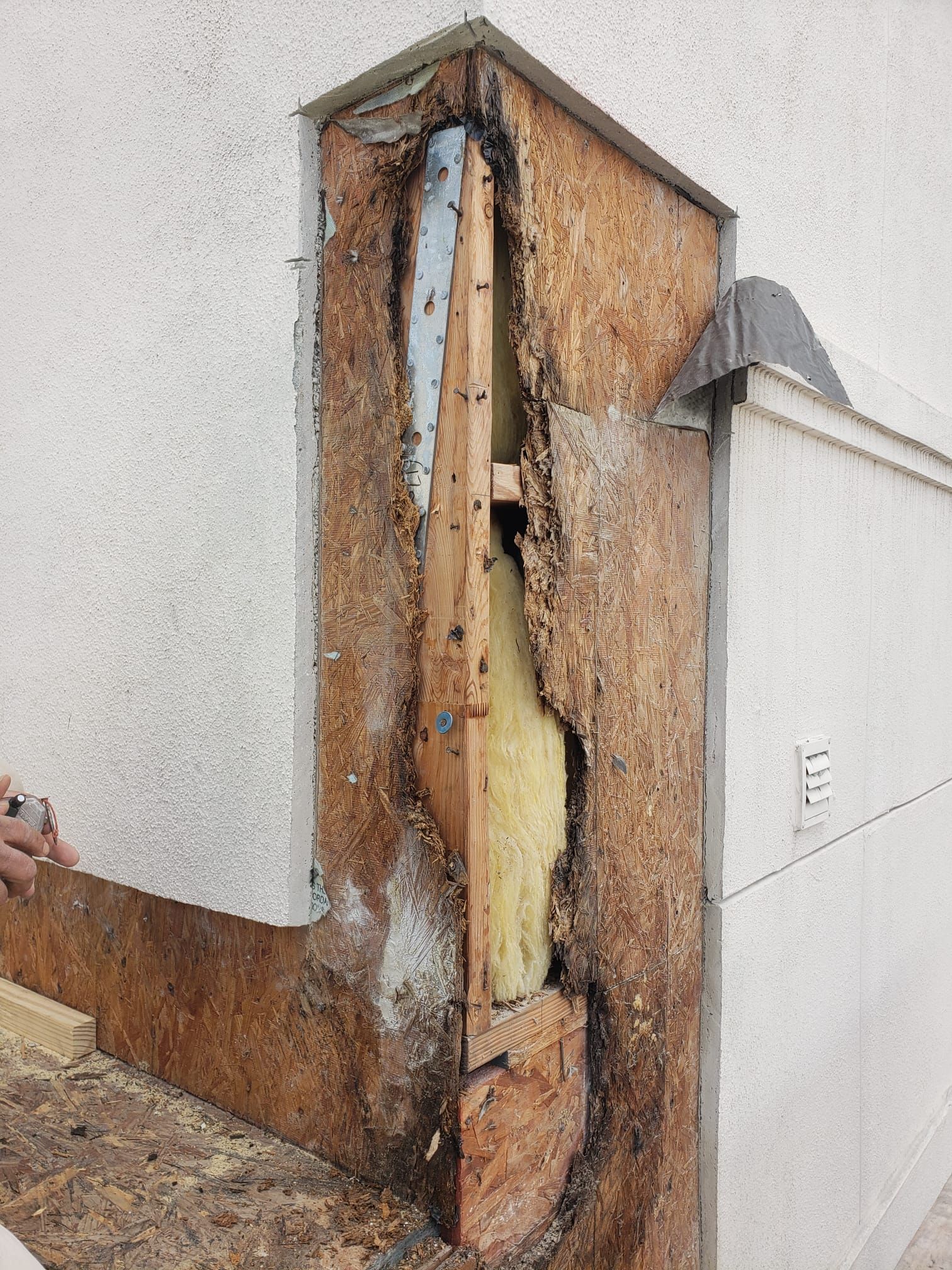
Once the source is identified, the next step is determining the full extent of the damage. Water intrusion can be limited to the stucco surface or extend into concealed areas such as the weather-resistive barrier, sheathing, framing, or insulation. A proper assessment distinguishes between cosmetic damage and structural compromise, including the potential presence of mold or long-term moisture retention within the wall assembly.
3. Substrate and Structural Condition
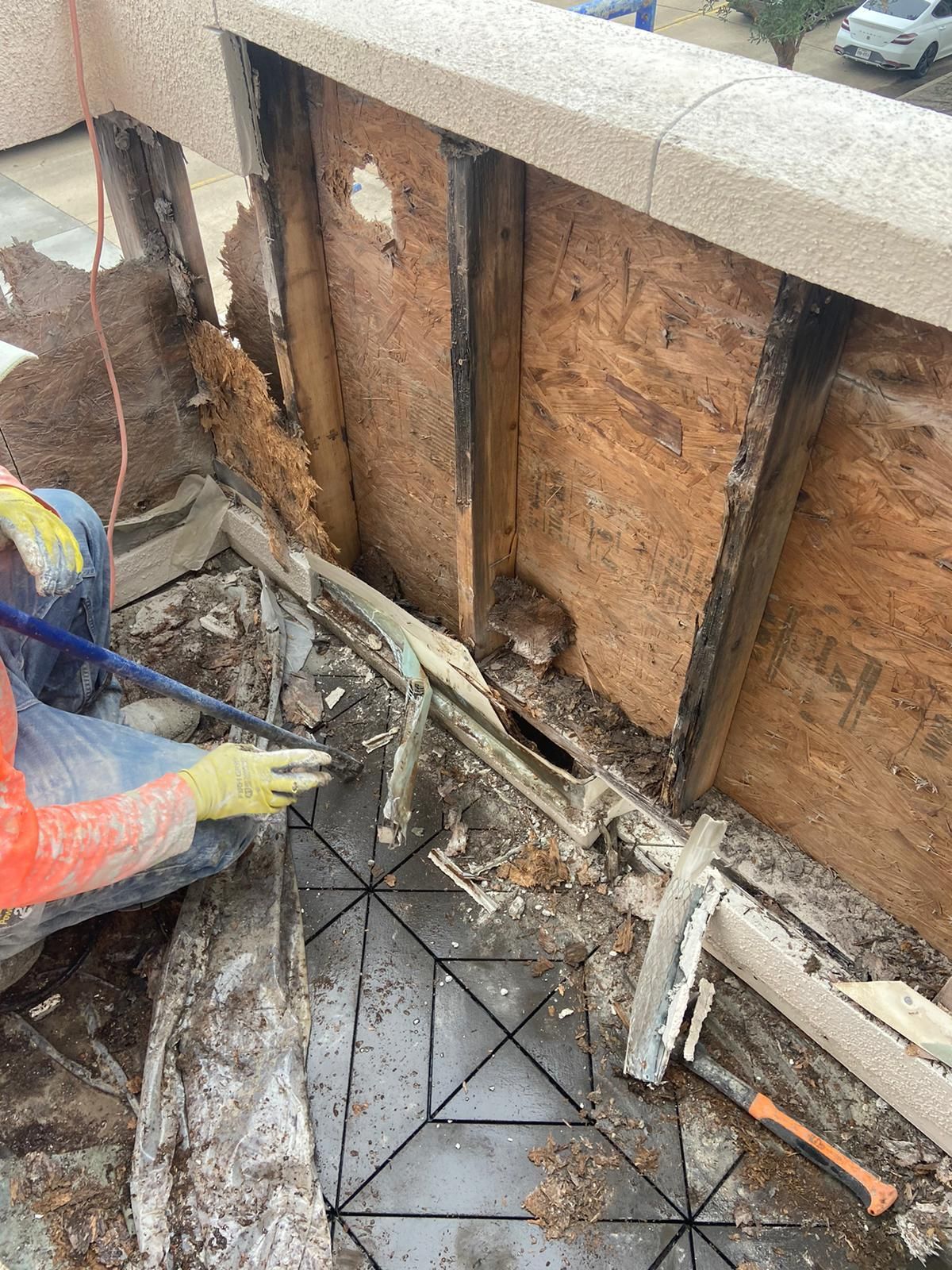
The condition of the underlying substrate is critical to the longevity of any repair. Damaged or deteriorated sheathing, rotted framing members, corroded fasteners, or compromised backing materials must be repaired or replaced before stucco is reinstalled. Solid, dry, and properly secured substrates are essential for adhesion, structural integrity, and long-term performance.
4. Flashing and Water-Management Details
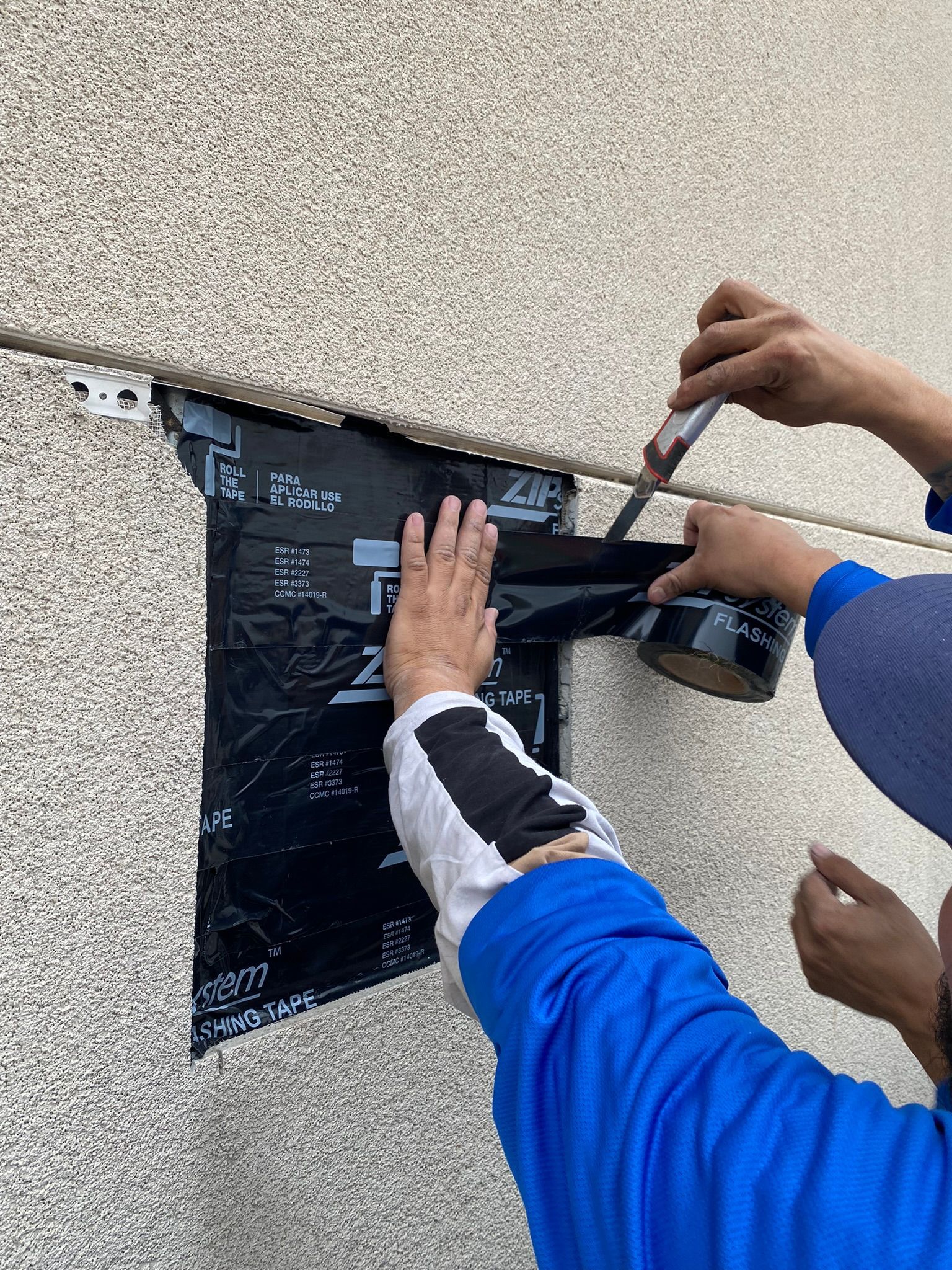
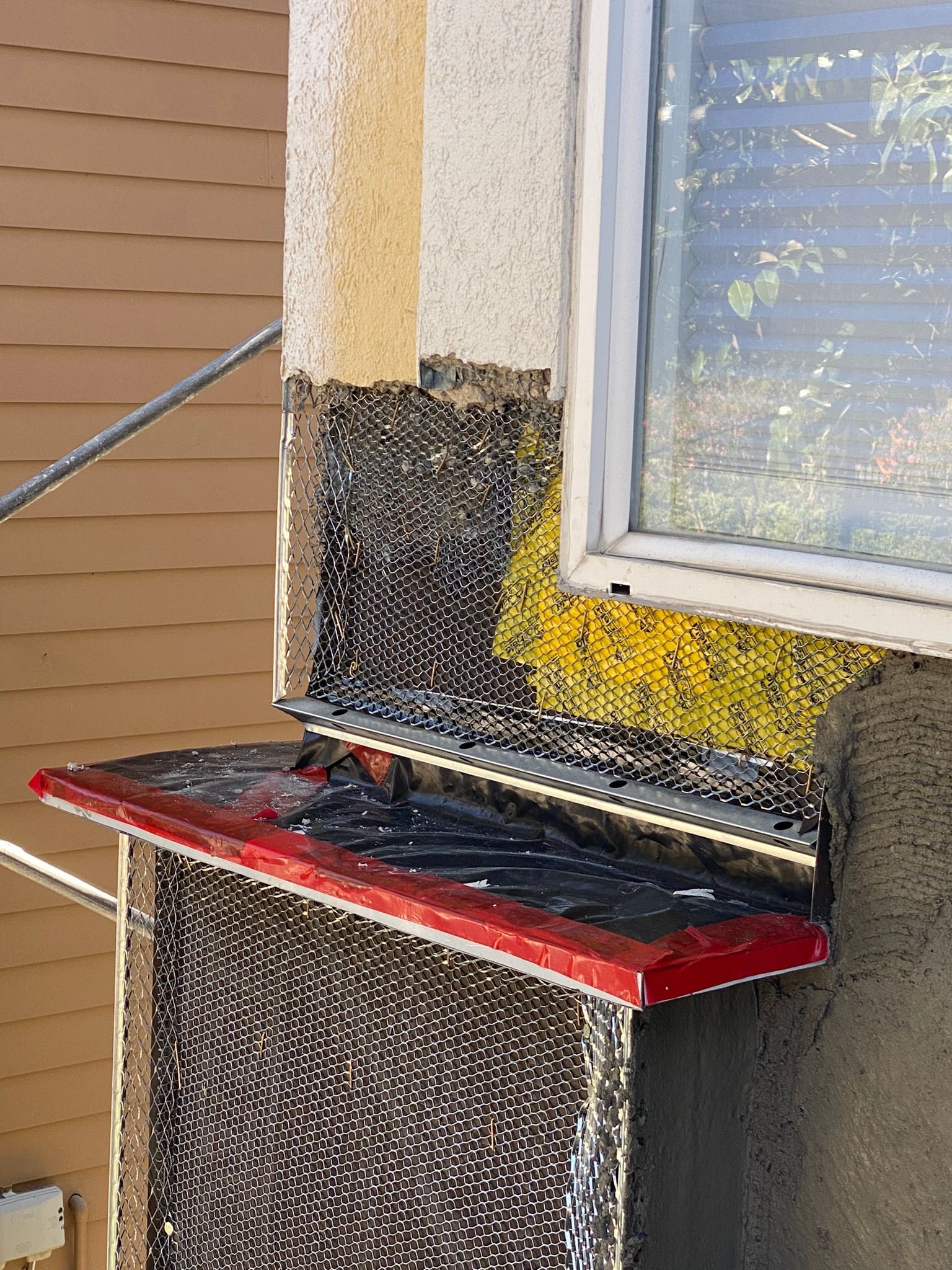
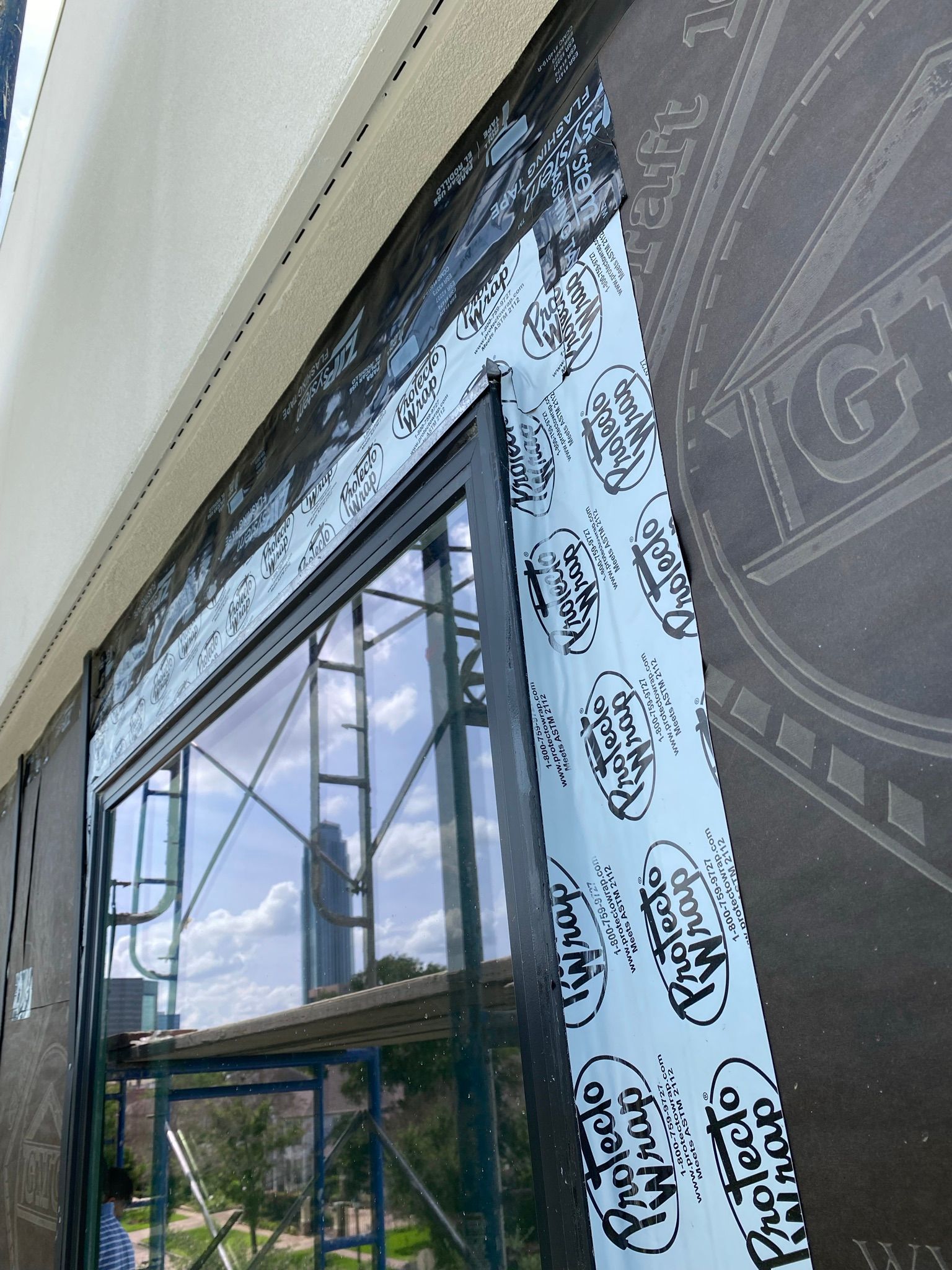
Proper flashing and water-management components are fundamental to preventing future water intrusion. This includes correctly installed head, sill, and jamb flashings at openings, kick-out flashings at roof-to-wall transitions, and appropriate detailing around all penetrations. These elements direct water away from the wall system rather than allowing it to enter behind the stucco.
5. Weep Screeds and Drainage Plane Performance
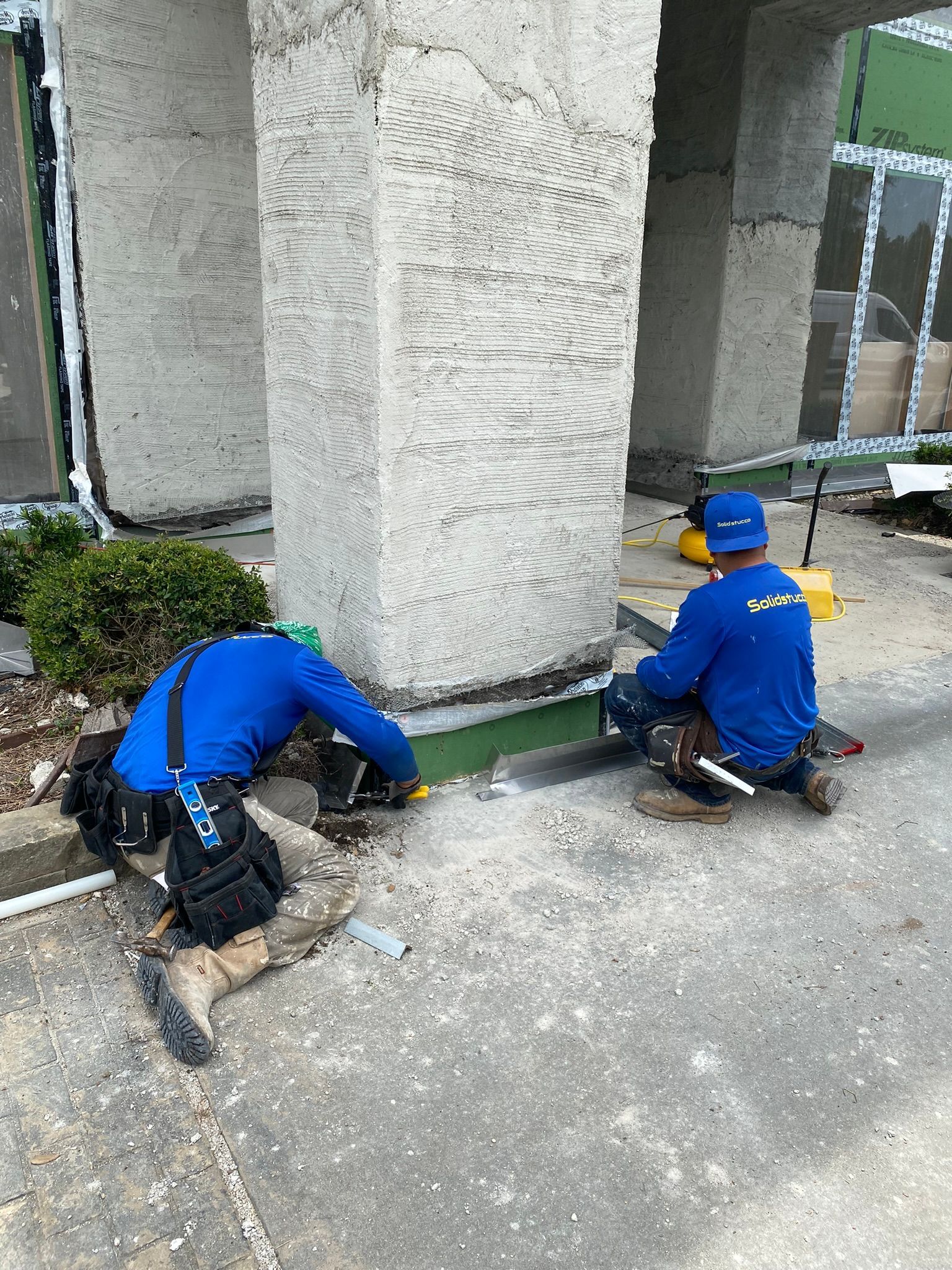
Weep screeds and drainage planes allow trapped moisture to exit the wall assembly. Repairs must ensure that weep screeds are properly sized, unobstructed, correctly terminated above grade, and integrated with the weather-resistive barrier. Blocked or improperly installed weep screeds are a common cause of recurring stucco failures.
6. Stucco Surface Repair Scope
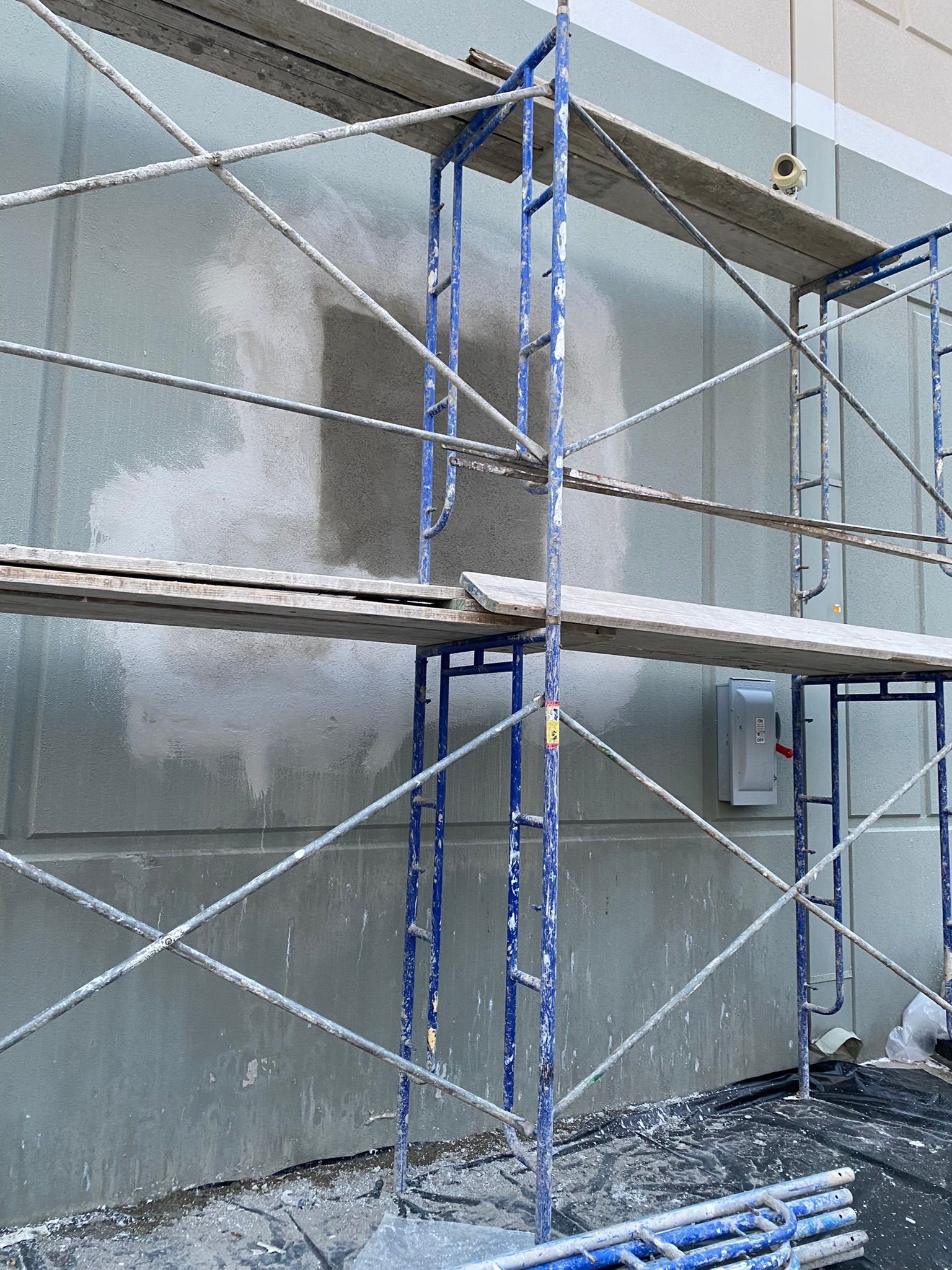
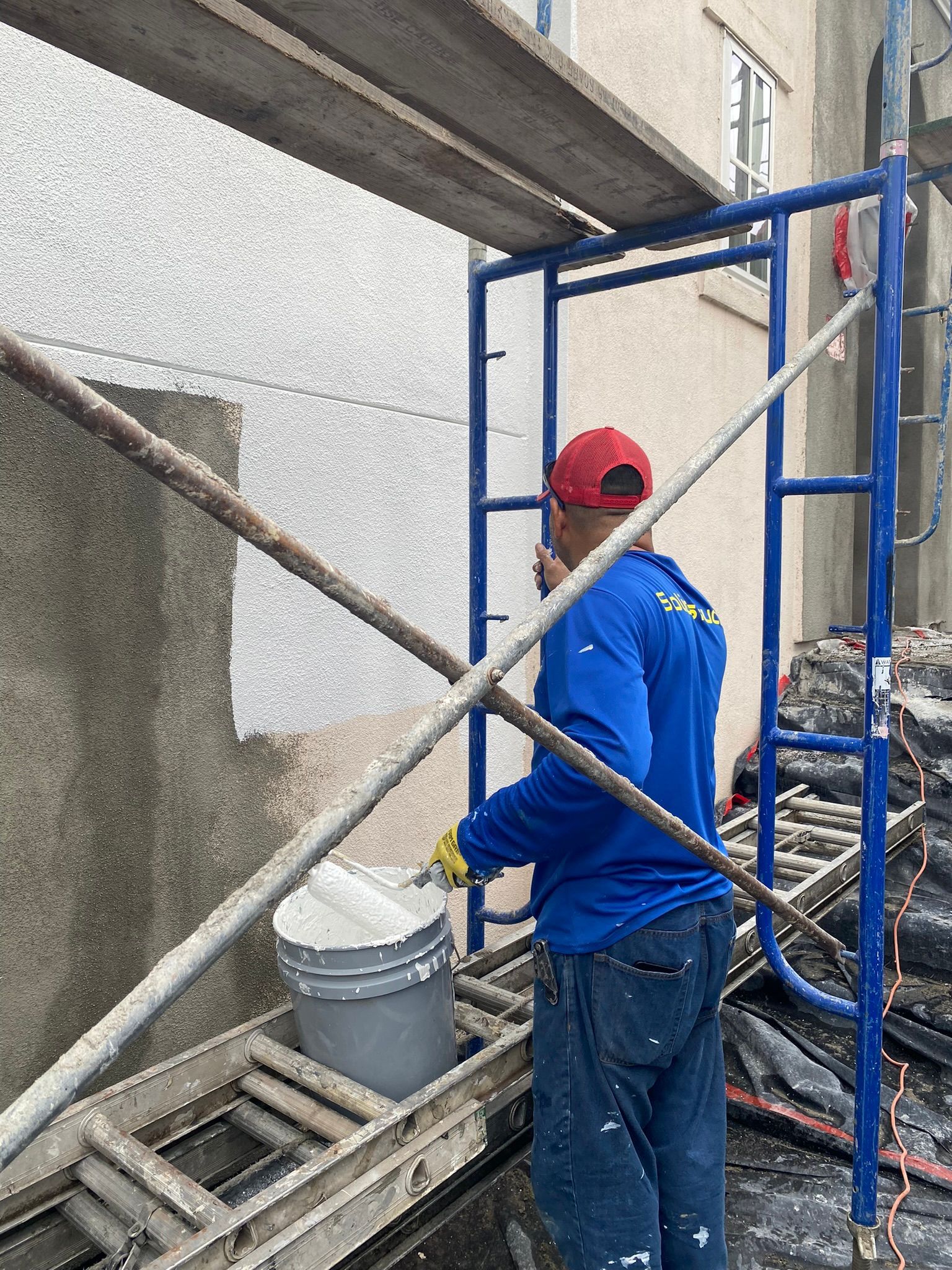
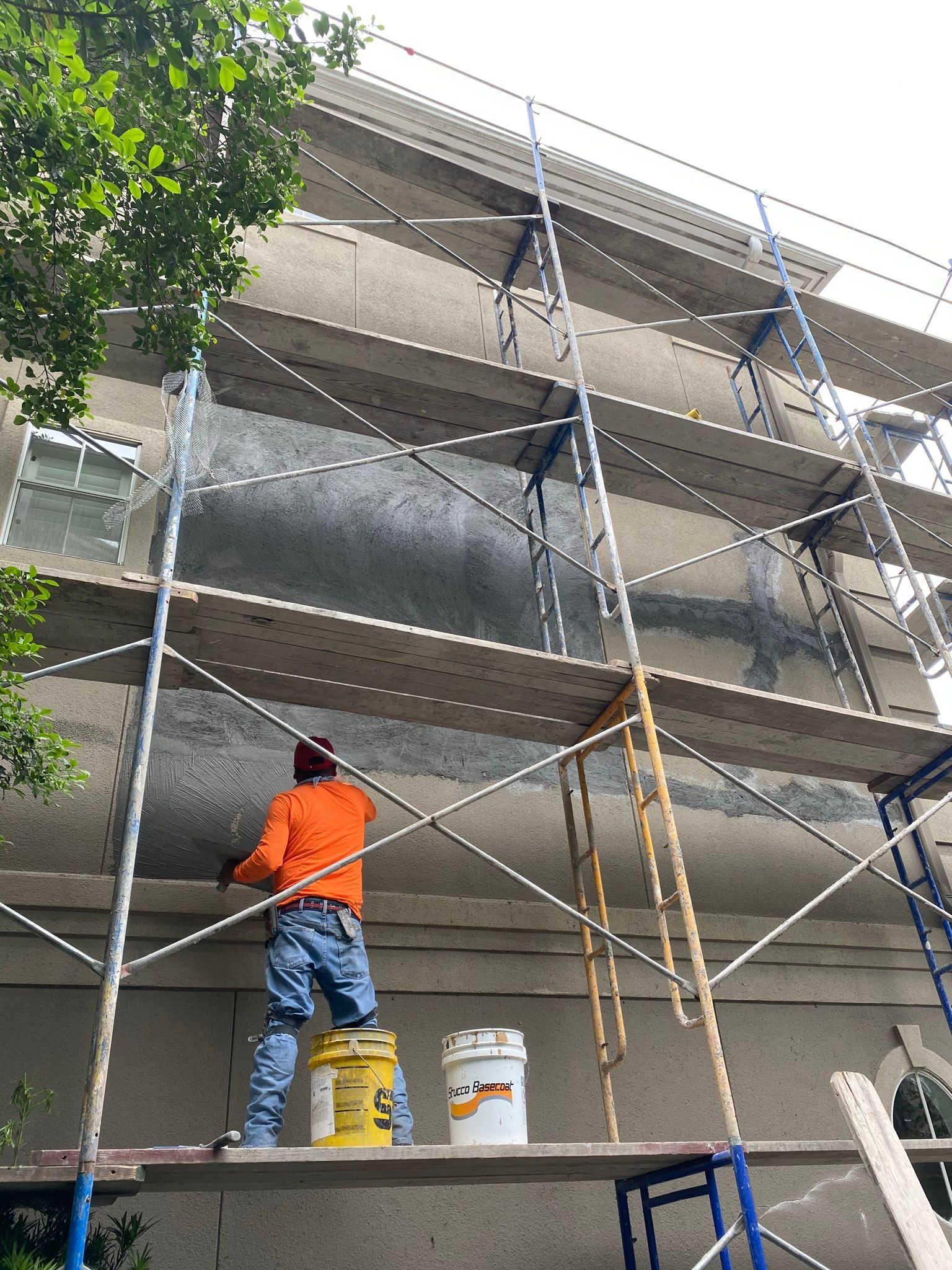
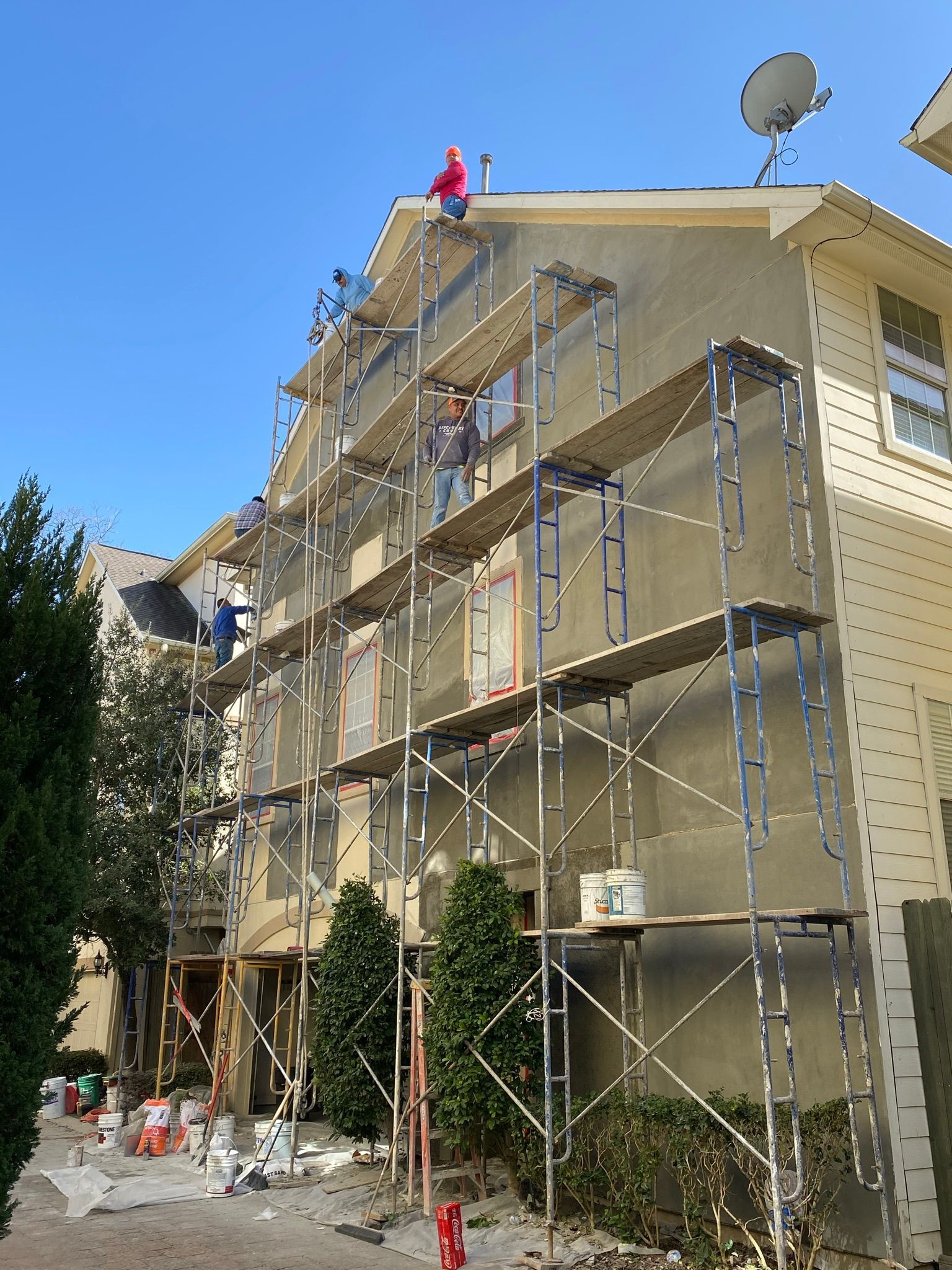
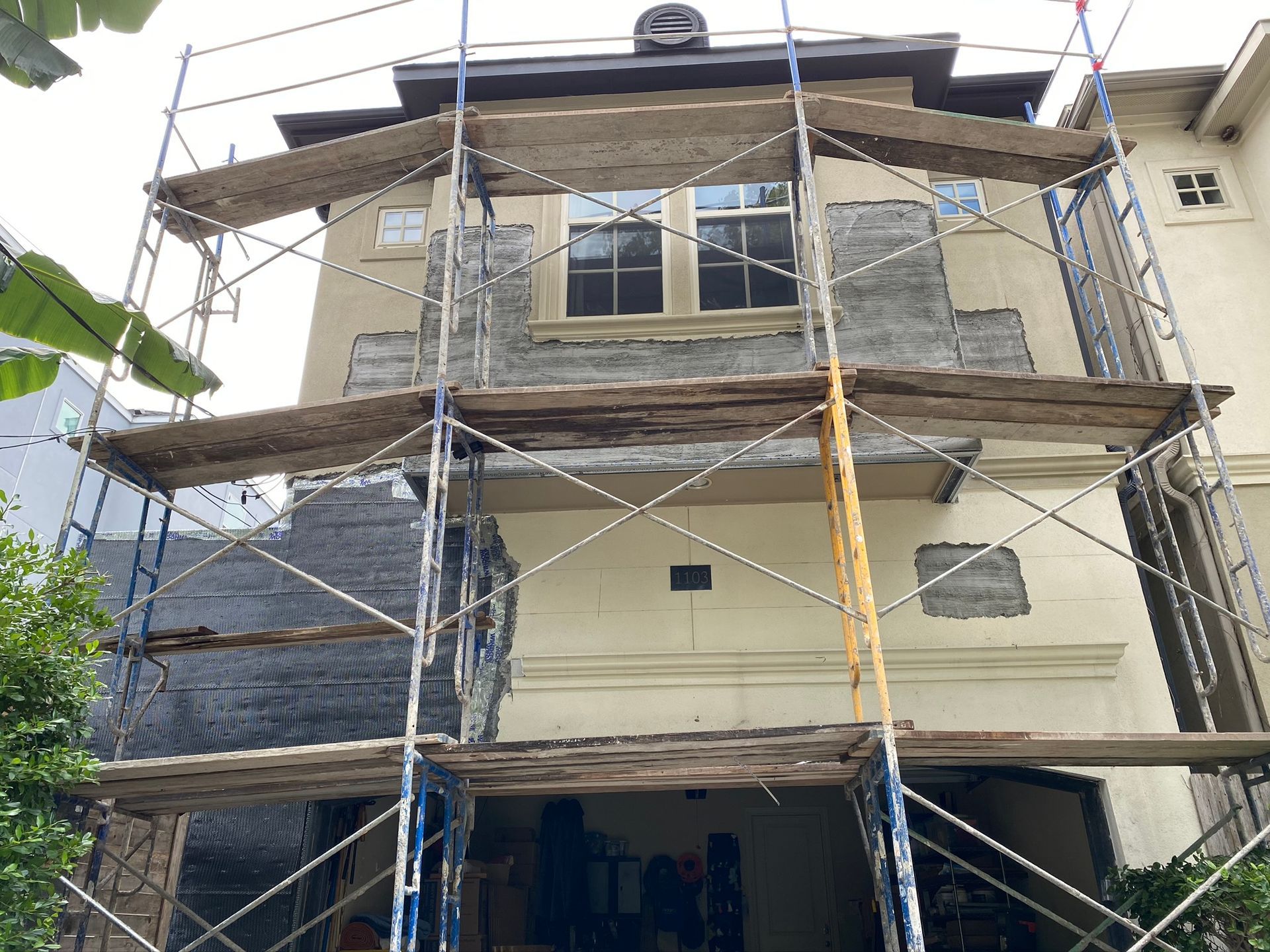
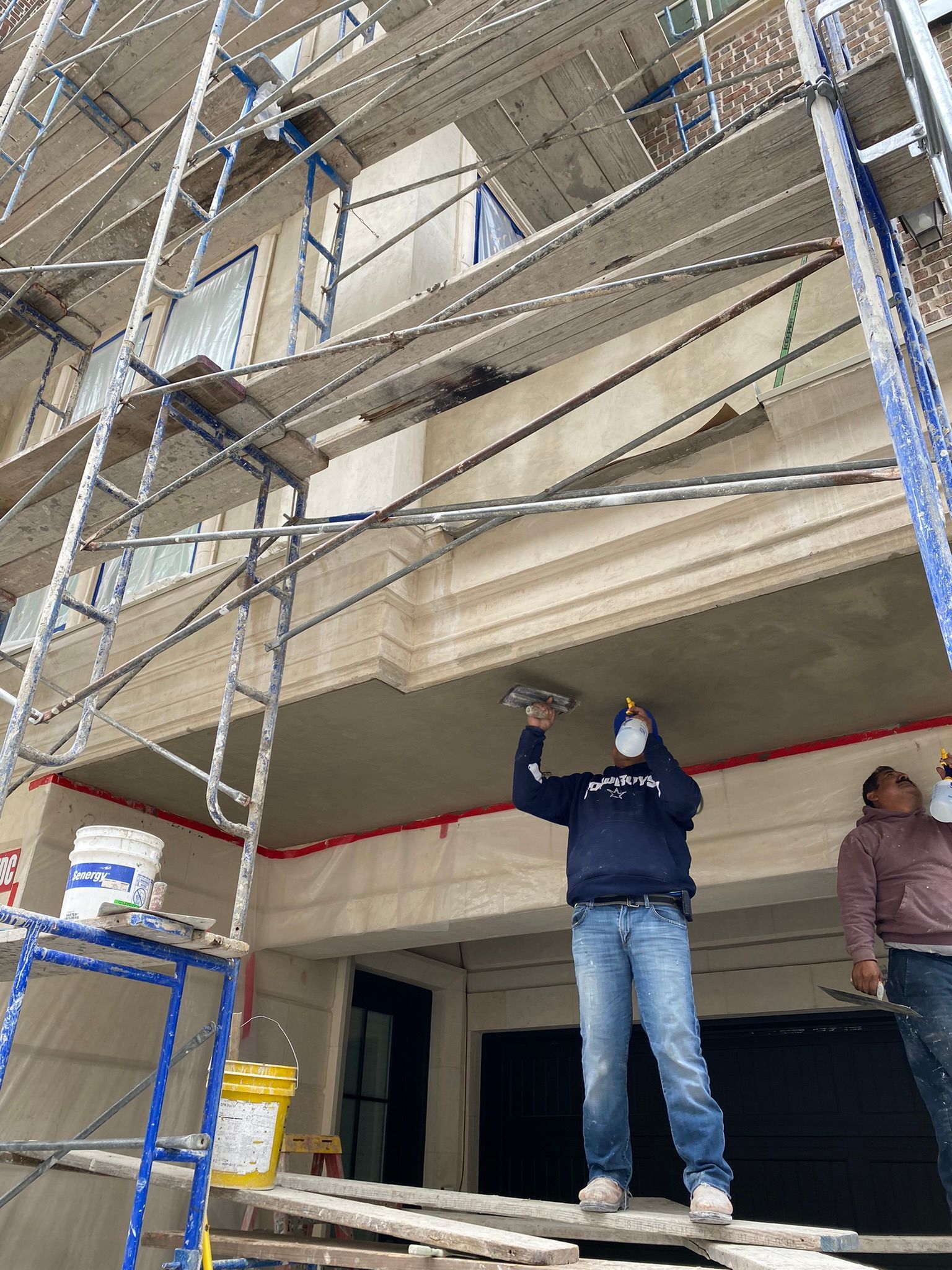
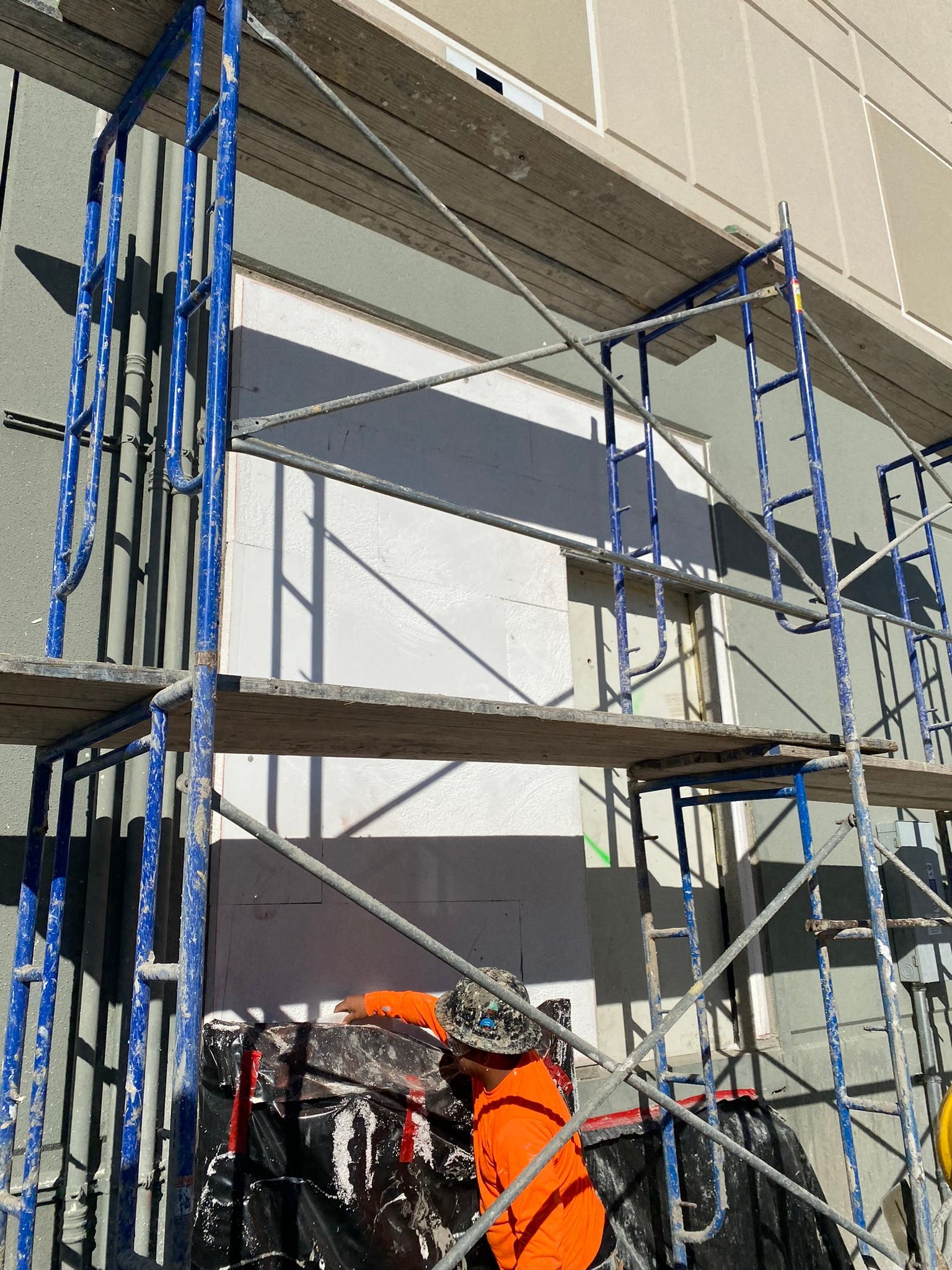
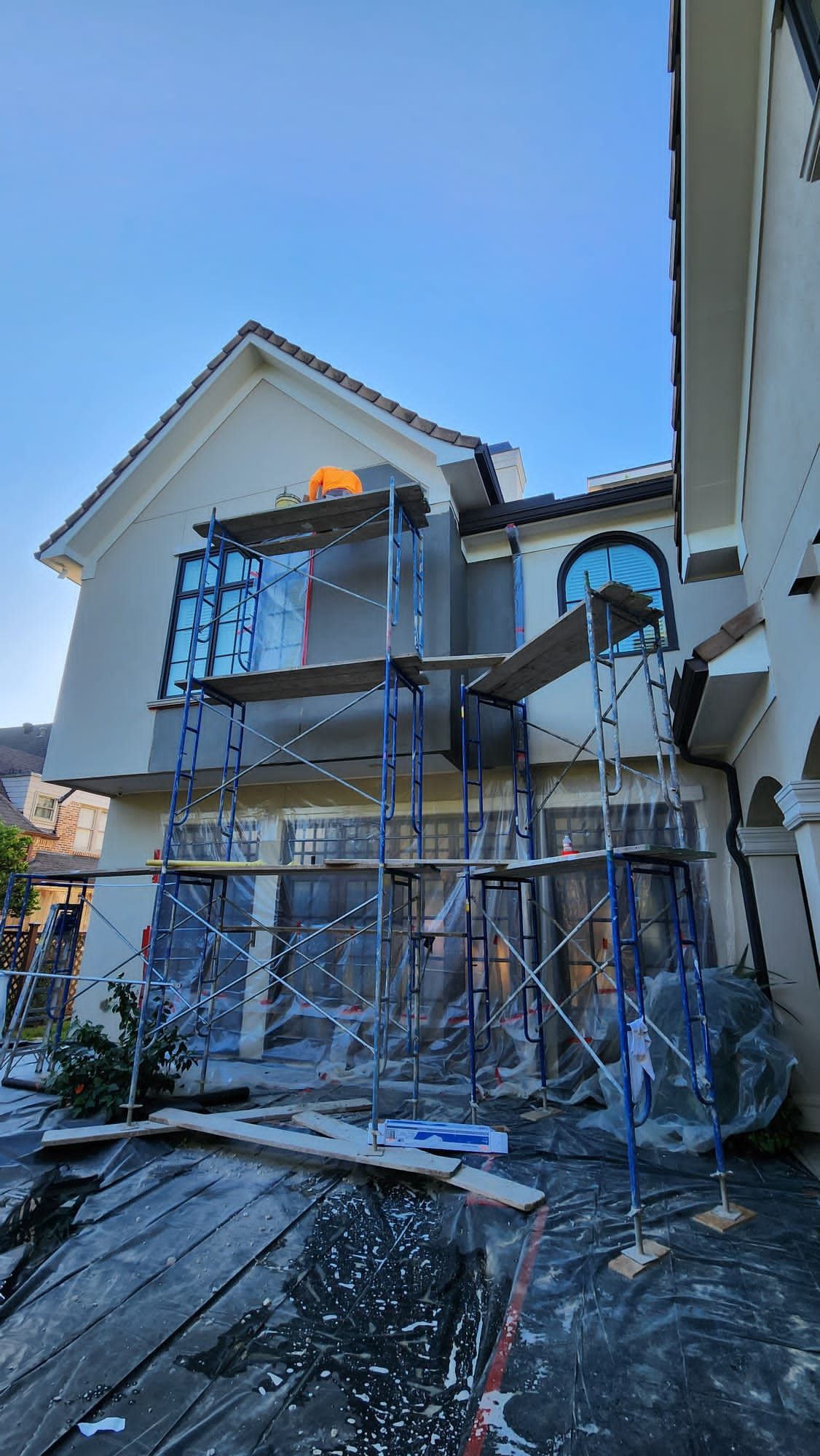
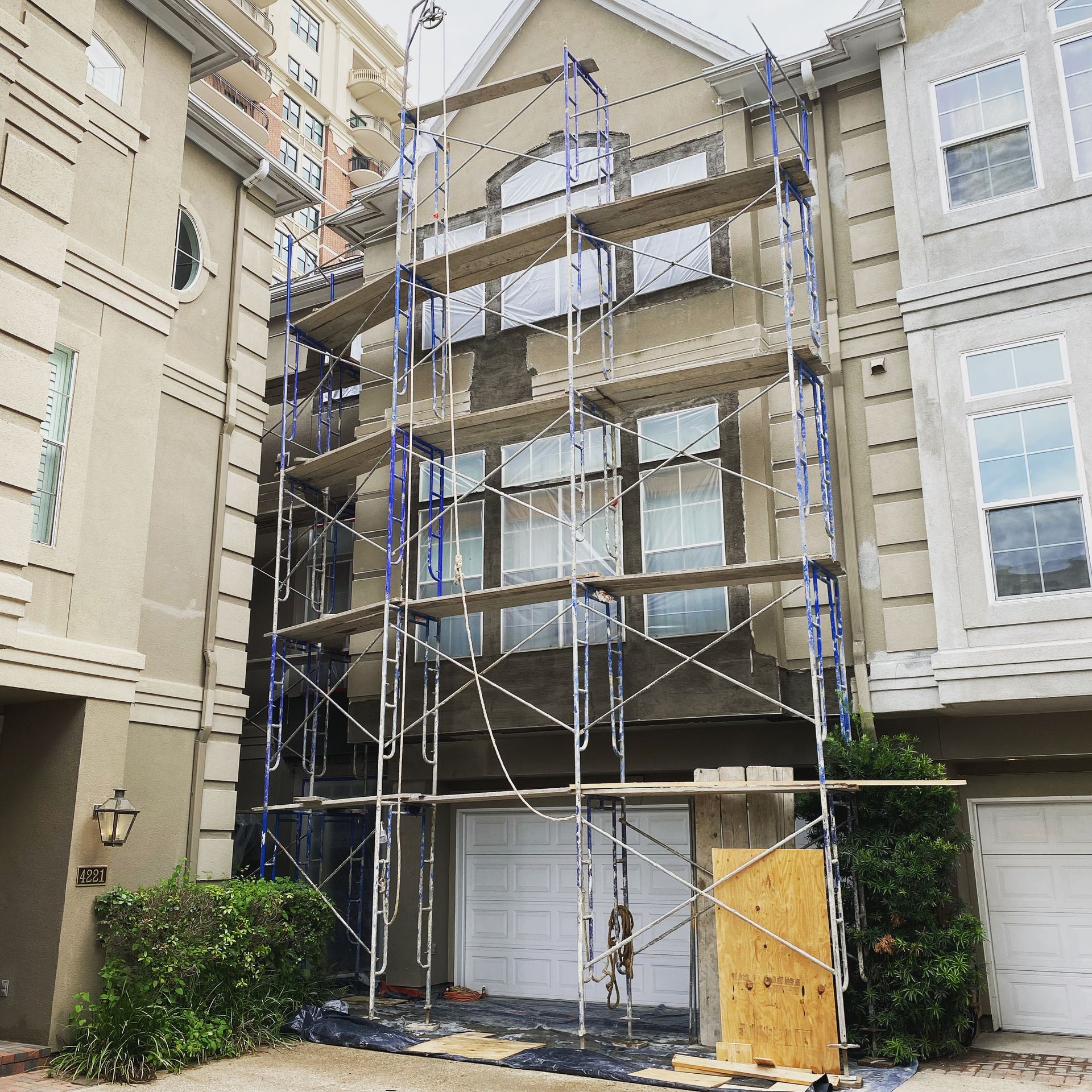
The scope of the stucco repair is determined by the type and severity of damage. This may involve crack repairs, partial removal and patching, or full replacement of affected areas. Texture blending, control joint placement, and realistic color matching are addressed to achieve the best possible visual consistency, while acknowledging that exact matches are not always achievable.
7. Material Selection and Compatibility
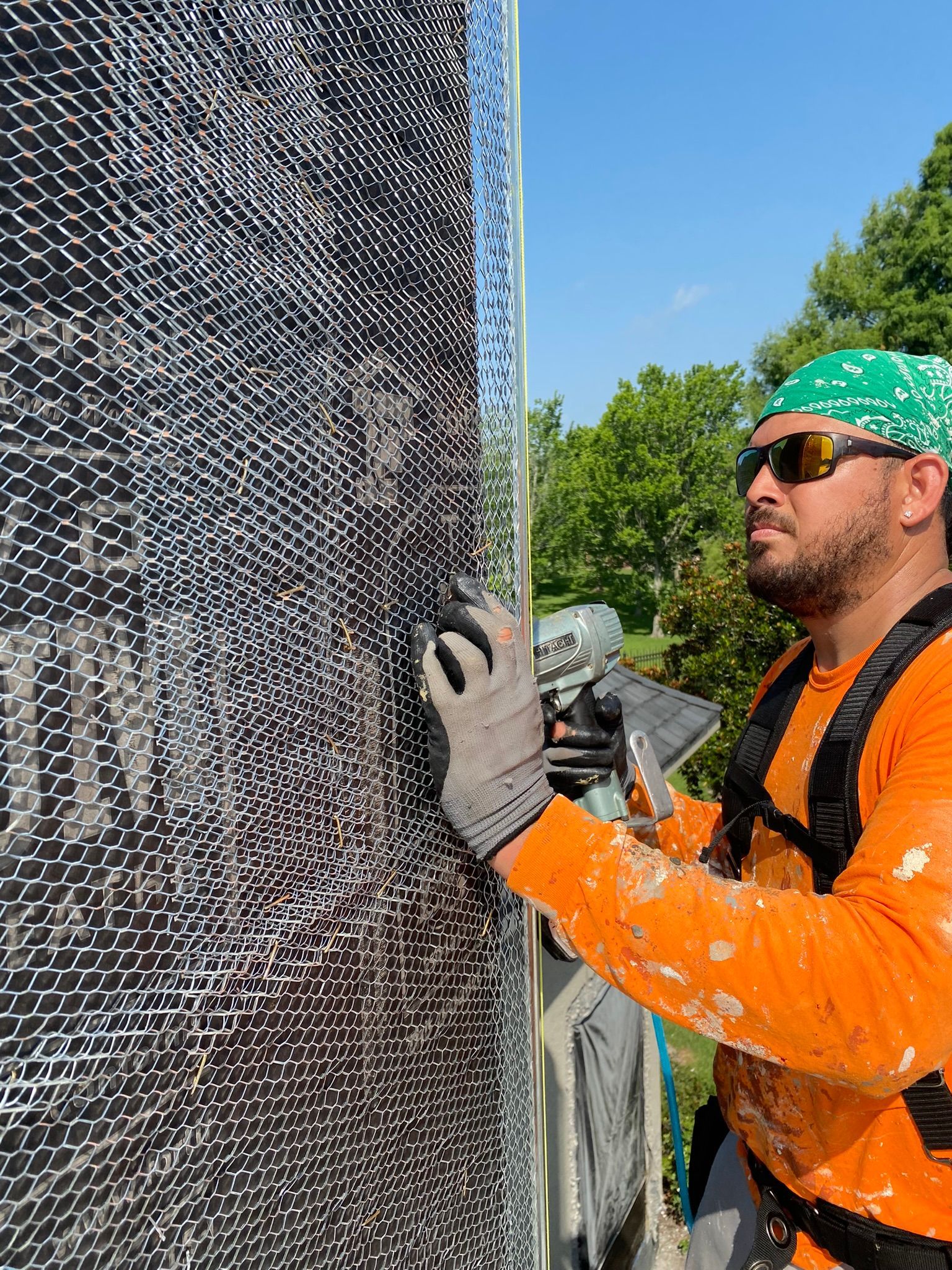
Selecting the correct materials is essential for durability and compatibility with the existing system. This includes corrosion-resistant lath, properly proportioned cement mixes, upgraded weather-resistive barriers when required, and high-performance sealants and coatings. Materials must work together as a system, not as isolated components.
8. Code Compliance and Best Practices
All stucco water-damage repairs must comply with applicable building codes and industry best practices. This includes adherence to IRC/IBC requirements, manufacturer installation guidelines, and accepted moisture-management standards. Proper compliance ensures not only safety but also long-term performance and resale protection.
9. Warranty and Long-Term Performance Considerations
Quality repairs account for long-term performance, not just immediate appearance. This includes workmanship warranties, material warranties where applicable, and recommendations for ongoing maintenance. Preventive measures and homeowner education play a key role in reducing the risk of future moisture intrusion.
10. Cost Planning and Repair Uncertainties
Stucco water-damage repairs often involve unknown conditions concealed behind the wall system. Accurate planning includes allowances for potential additional repairs once demolition begins, drying time requirements, and sequencing impacts. Clear communication about these variables helps set realistic expectations and avoids surprises during the repair process.
Stucco Repairs
Cracks and Damage
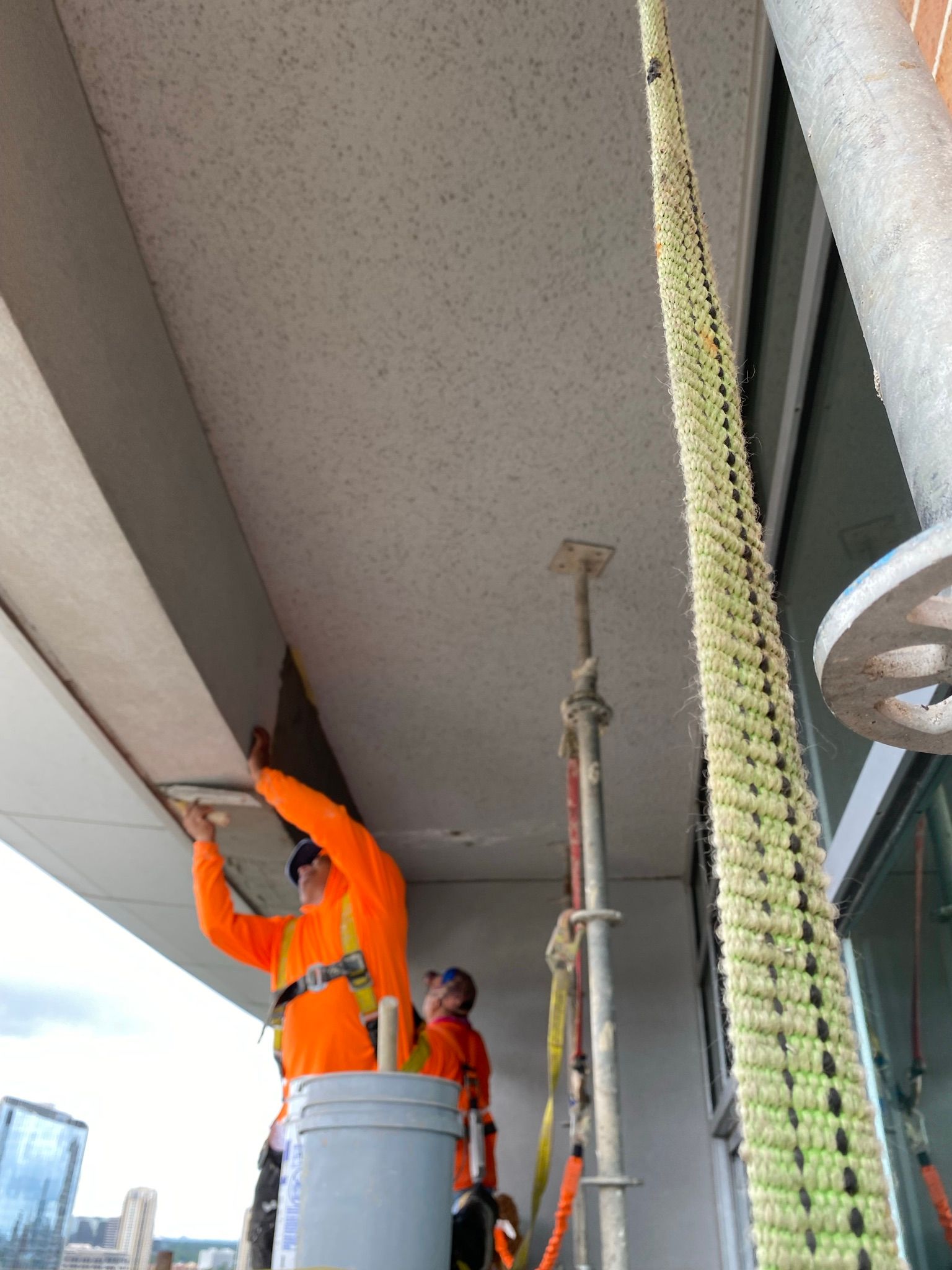
Repairing cracks and other forms of damage that may develop in the existing stucco over time due to weather, settlement, or other factors.
Water Damage
Addressing water damage and moisture-related issues in the stucco, which can lead to mold, rot, or other problems.
Stucco Patching
Repairing small holes, imperfections, or damaged areas in the stucco surface. This process involves blending new stucco with the existing finish to achieve a seamless appearance.